Showing posts with label National Geographic Kids. Show all posts

Thursday, December 11, 2025

Review: Greeking Out


* Book sent for review

This is the 3rd book in a series of mythology books 

This book features 20 tales from the underworld. Not all the tales are from Greece Mythology. The stories are mixed with bite sized chunks of information like: Individuals who cheated death, different death celebrations, or how to wrap a mummy. This tone of this book is humorous, which isn't easy when you're talking about death. I love the little facts in each story: like the one that shares a very very old story. The illustrations are fun.

This is a fantastic book for someone interested in mythology and a must have book for school and public libraries. 

The first story showcases a son of Poseidon: Theseus. 

This is a great tie-in to Season 2 of Percy Jackson and the Olympians, which was just released yesterday

Friday, December 15, 2023

Where I am today

 If you're old school like me:

If you're not:


Where I am:

The book I read:

The Facts I Learned:
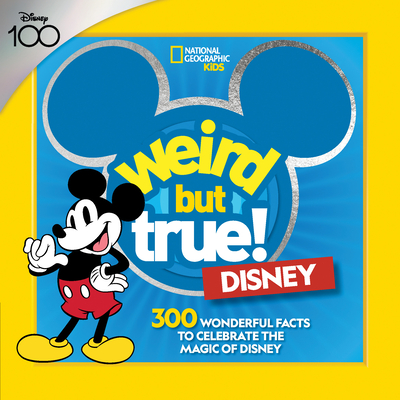
Main Street USA (Disneyland) was inspired by Walt's hometown in Missouri
A pizzeria in Epcot has three ovens - each named after volcanoes in Italy
A snow model used in Frozen is helping scientists study avalanches 
Walt wanted live animals on the Jungle Cruise
As a boy, Walt drew on anything her could find - even toilet paper

Check out this one, it's worth a read! 

Come back next week to see all the photos!


Monday, April 24, 2023

Blog Tour: Water

Welcome to the Water! Blog Tour & Giveaway!
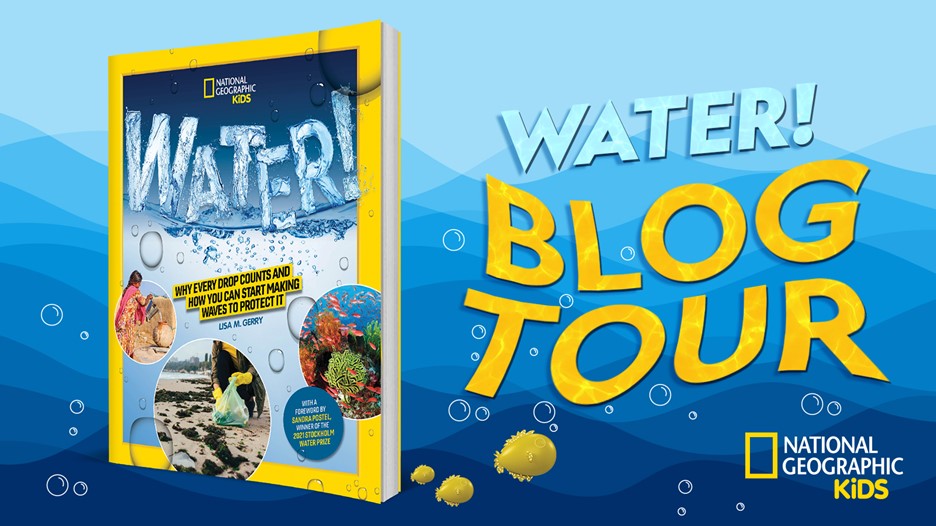
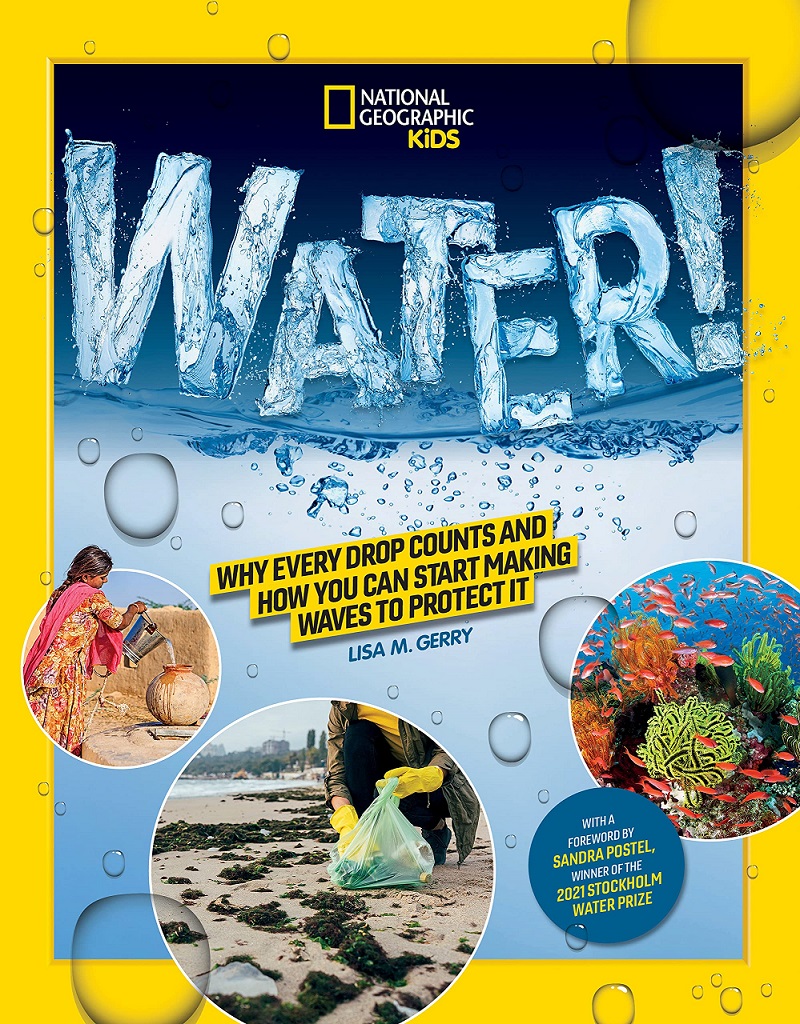
  Welcome to the blog tour for Water! Why Every Drop Counts and How You Can Start Making Waves to Protect It. Did you know the water in your glass could be the same water the dinosaurs drank? Dive in for a week’s worth of interviews with fascinating “Water Warriors”, profiles on the latest H20-saving tech and learn incredible facts about Earth’s water, the challenges facing it, and how your actions can help defend this precious resource.

Sharing Secret Water Worlds:

A Q&A with “Water Warrior” and National Geographic Explorer, Jenny Adler

National Geographic Explorer Jenny Adler began her career as a marine biologist, studying the many organisms—both big and small—that live in the sea. But Jenny soon realized she wanted to do more than study the natural world; she wanted to share it and show it to people. She figured if she could communicate how cool these ecosystems are, people would begin to care about them and want to protect them! So that’s exactly what Jenny does. She uses her passion for underwater photography to introduce people to water worlds they might otherwise never see. One of these worlds is the Floridan aquifer. The Floridan aquifer stretches for more than 100,000 square miles (259,000 sq km) of the United States. It lies below all of Florida and parts of Alabama, Georgia, and South Carolina. The Floridan aquifer is a system of underground rock that is porous, meaning it has holes that water or air can pass through. As water trickles down from Earth’s surface, it is held underground in the limestone. The water in this rock, from tiny holes to huge passageways, make up the aquifer. And Jenny does something super special: She scuba dives and takes photos inside the aquifer’s underwater caves.

 How do you get into the aquifer? 
Florida’s springs are like a bowl of clear freshwater. Then, somewhere in a spring—usually at the bottom or the side—there will be this black hole. That’s the spring vent and that’s where the water flows up from the aquifer. It’s kind of like this opening to this underground labyrinth of caves, which is pretty cool. 

What inspired you to swim through that little hole and scuba dive in the aquifer? 
Springs are really beautiful to swim in and I was swimming in them in all my spare time. I was learning so much about them and the curiosity was killing me. I thought, there are openings at the bottom of all these springs—I want to know what’s in there, and I want to see what’s it’s like. 

So first you needed to become a certified cave diver and then you ventured into the aquifer. What is it like inside an aquifer? 
People always think that aquifers are really colorful and bright because in the photos there might be 10 or 15 lights lighting them up. But in reality, in the aquifers, it’s the most pitch-dark place you could ever imagine. It’s like going into a closet, shutting the door, and putting a blanket over your head. There are no stars, there’s no moon, there’s no light sneaking in from anywhere—it’s absolutely, completely dark. So, when you’re in there, you really start to focus on other things, like the sound of the bubbles from your regulator. 

What do you love about cave diving? 
When I’m diving, I’m completely hyper-focused on what I’m doing, and my body and my mind are relaxed. I feel distracted above water sometimes, but underwater, it’s very peaceful. You feel completely weight - less, and the water is so clear that you almost can’t really tell that you’re in the water, so it feels like you’re hovering in outer space. It’s an amazing feeling. 

What surprised you about the aquifer? 
The caves really vary in size. At one spot, you might have to squeeze through an area where you don’t think you’re going to fit, and then the cave will open up into a room that’s big enough to fit a Boeing 747. The caves will go from being huge to tiny and from rock that’s full of holes like Swiss cheese to rock that’s really smooth. As I experienced so many different parts of it, I started to understand how complex the world is beneath our feet. It’s really rewarding and also sort of mind-blowing. 

Are there fish and other living things in there? 
In the springs there is a ton of life, but once you enter the caves where it’s dark, there isn’t much that can survive there. But there are these cool cave crayfish and amphipods that live in the caves. Most of them are albino; they’re completely white, and they’ve adapted to live in the cave. 

How did swimming through the aquifer affect the way you think about how you use water? 
It made me realize how close we are to our water, and how crucial it is that we protect it. What we do at the surface has a huge impact on the water beneath our feet.


Buy | Buy on Bookshop.org | Add to GoodReads

  About Water! Why Every Drop Counts and

How You Can Start Making Waves to Protect It

(ages 8-12, Paperback, National Geographic Kids Books)

Did you know the water in your glass could be the same water the dinosaurs drank? Discover more incredible facts about Earth’s water, the challenges facing it, and how your actions can help defend this precious resource. No doubt about it, water is fascinating. It’s also essential. But our planet is facing some serious water problems: Drinkable water isn’t easily accessible to everyone, the demands for water around the globe are increasing while the supply is limited, and some human actions are causing disastrous ripple effects downstream for ecosystems and the animals that live in them. Fortunately, there is hope! And that’s where this book comes in. By learning the ins and outs of important water issues and making small but powerful changes in our daily life, we can help protect the water that connects us all on our beautiful blue planet. Features include:
  • What kids can do right now to combat climate change
  • How to make a water filter at home and other fun activities
  • How small changes in your daily routine can equal big water savings
  • Q&A's with "Water Warriors" from around the world
  • Special reports on "pulled-from-the-headlines" events that have recently impacted water and water supply, like the impact of war on water supply, the socio-economic implications of the water issues in Flint, MI, and how the residents of Cape Town South Africa pulled together to avoid "Day Zero."
Water! is a fascinating look at Earth’s water and a call to action to young readers to help safeguard it. 

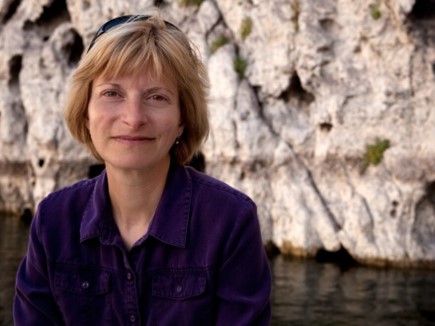
About the Author: Lisa M. Gerry is a writer and reporter who began her career as an intern at National Geographic Traveler magazine. She has since authored numerous books for National Geographic Kids, including Puppy Love and several installments of the 100 Things to . . . series. She has also worked as a writer for Time, Forbes, and Business Insider.

Website | Twitter

  About the Expert Contributor:
SANDRA POSTEL (expert contributor) directs the Global Water Policy Project and is a National Geographic Explorer. She is a frequent lecturer, author, and consultant on global water issues, and in 2021, she won the prestigious Stockholm Water Prize, often described as the Nobel Prize for water. She is the author of Replenish: The Virtuous Cycle of Water and Prosperity; Pillar of Sand: Can the Irrigation Miracle Last?;and Last Oasis: Facing Water Scarcity, which appears in eight languages and was the basis for a PBS documentary.

Website

GIVEAWAY

Friday, September 23, 2022

Blog Tour: How to Speak Animal

Welcome to the How to Speak Animal Blog Tour!

To celebrate the release of National Geographic Kids' How to Speak Animal on August 16th and World Animal Day on October 4th, this week blogs across the web will feature special excerpts from the book, sharing fascinating insight into the secret language of animals of all shapes and sizes. If you’ve ever wondered why ants touch antennae when they meet, what it means when a cichlid fish pees, or why turkeys gobble, this is the blog tour (and book!) for you!

How to Speak... TURKEY

Turkeys are known for their “gobble,” but did you know that hens (female turkeys) can’t make that signature sound? They make a clucking noise instead, which is used to get the attention of another hen or a tom (male turkey). Turkeys can make about 15 different vocalizations in the wild. A loud series of yelps is an “assembly call” for when a hen wants to gather her flock together. When turkeys are content—when they are being fed, for instance—they make a soft purring sound. 

Male turkeys use the sound of gobble, gobble to keep other males away and to attract the attention of a female. They combine this vocal communication with an impressive display of body language: a dance called tidbitting, in which the turkey bobs its head while its red wattle, a fleshy piece of skin that hangs from its chin, flops around. Male turkeys will also strut, fan out their tail feathers, throw their head back, and walk with their wings low, dragging on the ground. A wattle may even turn a deeper red as blood rushes to it, which helps attract the attention of hens. 

This is called multimodal communication because it combines two kinds of cues—in this case, auditory and visual—to communicate a message. The turkey’s message is “I’m a great mate.” Multimodal communication increases the chance that the message will be received even if there are distractions or disturbances nearby.

***************
INSIDER INFO
A turkey has a wattle, skin that hangs down from its lower jaw, and a comb, which is the growth on the top of its head. It also has a snood, which is the flap of skin that hangs over its beak. These features, as well as the turkey’s feet, keep it cool because the bare skin is exposed directly to air, while the rest of its body is covered with warm feathers.

***************
DID YOU KNOW?
Male turkeys poop in the shape of a J, and female turkeys poop in a spiral shape. 


BuyGoodreads

Learn about the secret language of wild animals in this exciting and informative guide from the experts who brought you How to Speak Cat and How to Speak Dog.

We know animals can’t speak and express themselves in the same way as humans … but even the smallest and quietest animals have incredible ways of communicating with each other. With wildlife veterinarian expert Dr. Gabby Wild as a guide, How to Speak Animal helps kids understand how animals communicate through sound, body language, and behavior. It’s full of expert insights and real-life stories of humans exploring ways to “talk” to animals, from teaching great apes sign language to speaking “dolphin.” Packed with super-engaging animal photography that helps illustrate key concepts, this fascinating bookprofiles more than 60 different creatures―from birds to mammals to reptiles and more―and their amazing ways of communicating with each other.

If you’ve ever wondered why gorillas beat their chests and make hooting noises, what it means when chameleons change color, or why some elephants twist their trunks together, this is the book for you!

 About the Authors

Website | Instagram | Twitter | Facebook | YouTube

DR. GABBY WILD earned her bachelor of science and doctor of veterinary medicine (DVM) degrees at Cornell University. She completed her veterinary internship training at Metropolitan Veterinary Hospital in Akron, Ohio, and received her master’s of public health (MPH) from the University of Minnesota. She is a published genetics researcher and uses her research background to screen zoonotic disease transmission among wildlife, domestic animals, and people. To help maintain a healthy planet, she monitors herd and individual health for rising epidemics. Dr. Wild balances her Western medicine practices with traditional Chinese medicine in an effort to blend both methodologies. Acclaimed for her role as “the veterinarian” on Animal Jam, the world’s largest online “playground,” with 54 million players, she creates educational videos and teaches children internationally about wildlife conservation and medicine. When not in the wild, Gabby works as a Wildlife Health Program veterinarian for the Wildlife Conservation Society at the Bronx Zoo and is a training veterinary surgeon at the Veterinary Medical Center of Long Island. She lives in New York City.

Website | Instagram | Twitter | Facebook | Pinterest

AUBRE ANDRUS is an award-winning children's book author with dozens of books published by National Geographic, Lonely Planet, American Girl, Disney, Scholastic, and more. She has also ghostwritten books for young YouTube stars. She currently lives in Los Angeles with her family. 


GIVEAWAY

  • Five (5) winners will receive a copy of How to Speak Animal
  • US/Canada only
  • Ends 10/2 at 11:59pm ET
  • Enter via the Rafflecopter below
  • Visit the other stops on the tour for more chances to win!

a Rafflecopter giveaway


Blog Tour Schedule:

September 19th Susie's Reviews and Giveaways
September 20th Pragmatic Mom
September 21st Mom Read It
September 22nd Randomly Reading
September 23rd YA Book Nerd

Monday, June 20, 2022

Blog Tour: Ultimate Book of the Future

Welcome to the Ultimate Book of the Future Blog Tour!

Ultimate Book of the Future by Stephanie Warren Drimmer is the perfect book for fans of sci-fi, budding engineers and scientists, lovers of futuristic movies and pop culture, and anyone who has ever dreamed about what tomorrow might look like. To celebrate its release, 5 blogs across the web are featuring posts from the book as well as 5 chances to win. Ready to sneak a peek at your life in the future? Read on! 
 

BUGS FOR BREAKFAST? THE FUTURE OF FOOD

Time for breakfast! You pour your favorite cereal into a bowl and grab a spoon. But there’s something a little different about these future flakes—they’re made of ground-up crickets and mealworms!  That might sound odd to some, but in many cultures, bugs are a common addition to the menu. And many experts believe that in the future, people all over the world will be munching on insects. 

Every year, the planet’s population grows by 70 million. By 2050, we’ll need 70 percent more food than is currently produced on Earth to feed all those hungry mouths. But we’re already running low on space for farming. We need to figure out a type of food that makes better use of the space we already have. And many experts think insects are the answer.

Insects are rich in proteins, vitamins, and minerals. They don’t need nearly as much room as cows or chickens—in fact, they thrive in dark, crowded conditions. They need little water. And perhaps most important, bugs give a lot of bang for your buck: For every two pounds (0.9 kg) of feed, a farmer can get 12 times more edible protein from crickets than he could from beef. 

That might not be enough to convince you to replace your grub with, well, grubs. But two billion people around the world already eat insects. In Thailand, people snack on grasshoppers, crickets, and woodworms that have been fried until crispy. In Ghana, people munch on termites in the springtime when other food is scarce. To help convince skeptics, some companies are already turning crickets into flour that can be made into snack chips, protein bars, and smoothie powders—no crunchy legs involved!

FUN FACT: Termites have a minty flavor.


Buy

Robot dogs! Jet packs! Cyborgs! Super-sleek space suits! It’s not science fiction, it’s science reality. And soon, it may be part of everyday life. This book is a jam-packed collection of the coolest tech and wildest ideas that are shaping the world of tomorrow.

Blast off for an unbelievably fascinating journey through time, space, and even a holographic pop concert (or two)! With chapters on future cities, space travel, high-tech entertainment, and even saving the world, Future World is a thorough, fun compendium of high-tech gadgets being built today and the coolest stuff tomorrow has to offer, plus the amazing dreamers making it all happen.

Special “Could It Happen?” features tackle kids” burning hypothetical questions, like whether Jurassic Park could really exist, or whether a robot could become president. Each chapter also includes a “Future Fail!” that profiles one thing we thought we'd have by now, but don't (like everything from The Jetsons.) And kids will see where they might fit into the picture through the “Jobs of Tomorrow” profiled in each chapter. (Job titles include mind reader, space pilot, and robot-human communicator. Seriously!)

Website

Stephanie Warren Drimmer is a science writer based in Los Angeles, California. She writes books and magazine features for kids about everything from the strangest places in space, to the chemistry of cookies, to the mysteries of the human brain. She has a degree in science journalism from New York University...but she thinks she likes writing for kids because she's secretly still one herself.


GIVEAWAY

  • One (1) winner will receive a hardcover of Ultimate Book of the Future
  • US/Can only
  • Ends 7/5 at 11:59pm ET
  • Enter via the Rafflecopter below
  • Visit the other stops on the tour for more chances to win!

a Rafflecopter giveaway


Blog Tour Schedule:

June 20th — YA Book Nerd
June 21st The Mommy Island
June 22nd Always in the Middle
June 23rd Susie's Reviews and Giveaways
June 24th — Feed Your Fiction Addiction

Monday, October 11, 2021

Review: Weird but True


300 facts about the USA,

Bright colors. Great photographs. Interesting facts.

This is a great book to read with someone else. 

Some fun facts: 
Banana twinkies. YUCK!

Yes, I'm one of those. YUM.

Weird but fascinating! Nerds for the Win!!

Cool. Who doesn't love fun facts about libraries???

Wednesday, August 15, 2018

Picture Book Review: It's a Puppy Life


35584909

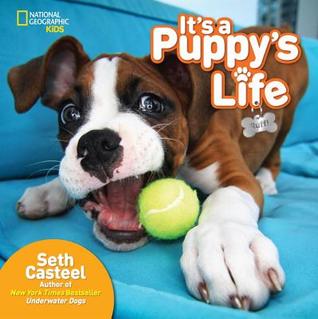
The life of puppies - in photographs.

An excellent book with amazing photographs. I love the playfulness of the puppies and how the book shares just one day in puppies' life. Plus there's a breed guide at the end of the book which showcases the puppies photographed. 

Perfect for those who love pups.

And for older readers, check out Underwater Dogs:
13614362

Wednesday, July 18, 2018

Picture Book Review: Some Bunny Loves Me


35353732

Adorable pictures
Fun poems
Perfect for animal loving kids 
Tips about taking care of animals
Different animals
Sweet


Monday, January 2, 2017

Review: Famous Fails

Failures come in all sizes from large to simple mistakes. Some failures result in something completely different and yet wonderful at the same time. Some require fixing and some are simply learning tools. 
My Thoughts: In order to succeed in life, there are going to be failures - lots of failures. Failures are a requirement in life. But failing can also be devastating and it's important to realize everyone fails. So I really enjoyed this book because not only because it highlighted failures (both famous and not so famous) but because it also played around with failure (upside down pages) to create a fun but effective message. 

Cover Thoughts: Fun
Source: My Library
Final Thoughts: Perfect for public and school libraries.

Monday, July 27, 2015

Mini Review: Guide to Photography

A beginning book of photography for kids for taking photos with both cameras and smart phones.
The Good:
Colorful photos
Tips and Tricks
Assignments
Tons of information- set up in an easy to read manner
Interviews with famous photographers
Information on photography careers

The Bad:
Nothing - I enjoyed everything about this book

Overall Thoughts: Grab this one for the budding photographers in your life! It's a fantastic book to help get them started and excited.

I enjoyed this book so much that I took a few pictures after reading this book. Check them out:


* Book sent for review

Tuesday, April 28, 2015

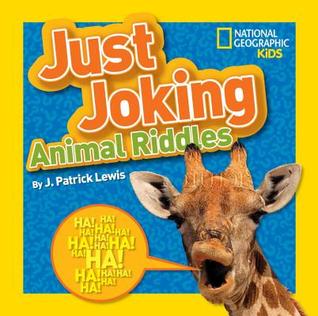
Tween Tuesday Mini Review: Just Joking


Animal Jokes, quizzes, and puzzles in brightly colored pictures.

The Good:
* Great Colors
* Great fonts that stand out
* Funny (sometimes terrible jokes)
* Lots of Trivia
* Lots of knowledge

The Bad:
* Would be great for a library binding edition (nitpicking)

Some of the riddles:


Final Thoughts: A fantastic fun book that entertains while getting your brain pumping with lots of laughter too.

Tuesday, May 6, 2014

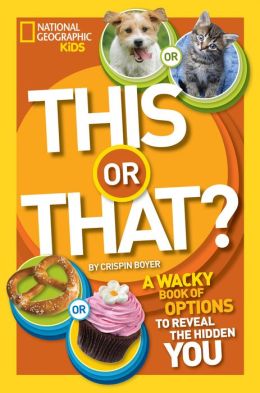
Tween Tuesday Review: This or That

I flipped through this book with my husband. Some questions were really easy to answer, some were a little harder, and some were down right difficult.

I loved the format of the book. The questions, then the facts behind the answer you chose and at the end of each chapter what your choices reveal about you. Once again ,the graphics are great. The cool fonts and bright colors help create an atmosphere of fun. 
Another winner to share with friends that had us talking and laughing over our choices.

Tuesday, April 29, 2014

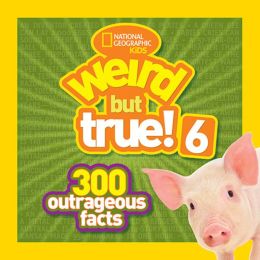
Tween Tuesday Review: Weird But True 6

300 weird facts:

Did you know that Palm Trees aren't trees? They're a type of grass.

Did you know that Batman's Cape was inspired by Leonardo DaVinci?

Did you know that at some State Fairs you can order deep fried jelly beans?

Did you know that it would take 5 people to actually Tip over a cow?

Can you name three popular names for dogs in the Medieval times? Hardy, Nosewise, or Sturdy.

Just a few facts you can learn from this quick, entertaining, and engaging read. It's one you'll want to share with others.

Tuesday, March 25, 2014

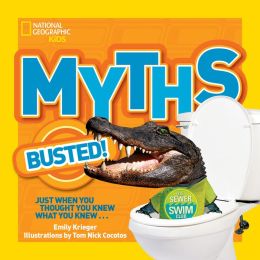
Tween Tuesday Review: Myth Busted

Things you thought might be true but aren't: alligators don't live in the sewers, a penny dropped from the top of the Empire State Building won't kill anyone, a full moon doesn't make people crazy, and gum doesn't really stay in your body for seven years.

My Thoughts: A really fun book with great pictures and great information. The perfect book to read and talk about with a friend! The two hundred pages fly by thanks to the information presented in a fun way. National Geographic Press has a knack for using great photographs, creating illustrations, and using text in eye catching way.

Cover Thoughts: Eye Catching
Source: My Library

Tuesday, March 18, 2014

Tween Tuesday Review: Stubby the War Dog

Stubby, a dog from Connecticut, found himself at the training site for the Connecticut National Guard in 1917. He learned some of the commands, made friends with the soldiers, and became a part of something much bigger than he ever expected.

When the soldiers went off to fight in World War I, Stubby went too. He helped out  keeping watch with the men, warning the men of attacks, and soothing aching hearts.

Wounded once, he went back to the line of duty to his friends and to his family. He's still in the hearts and minds of those who knew him and a whole generation just learning about him now.
My Thoughts: A great book on this lovable dog. I love that he knew how to salute and how he knew commands. I love that he drilled with the soldiers and cuddled with them when they needed someone most. I felt bad for J. Robert Conway when he died, but loved the time they had together. Great photographs of Stubby and soldiers round out this book. I really liked seeing his coat and all the medals on it. The only thing missing from this book is maps on where Stubby was during the war. Extensive resources are in the back of the book for further exploration on Stubby's life. Perfect book for animal lovers or for another perspective on war.

Cover Thoughts: Great
Source: Book sent for review.

Tuesday, February 25, 2014

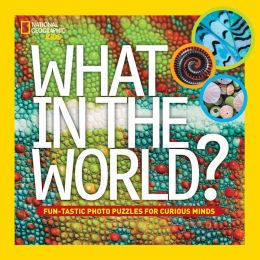
Tween Tuesday Review: What in the World?

A fun book created from photos found in nature, altered photos, and plenty of puzzles. 

My Thoughts: I really enjoyed this book - looking at the amazing photos (the magnified ones, the hidden animals, and the patterns). The pictures were outstanding - bright, colorful, and many found in nature. I loved the games - finding the differences and spotting the items. A book full of entertainment and fabulous photos that's sure to be a hit.

Cover Thoughts: Awesome
Source: Sent for Review
Similar Read: I Spy
Age Range: While I think tweens will still enjoy this, it will also work for younger readers.

Sunday, December 8, 2013

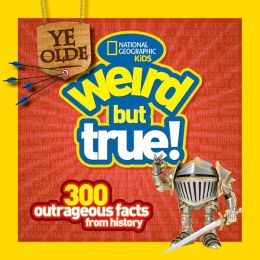
Mini Review: Ye Olde Weird but True

300 facts from history ranging from ancient days to not that long ago.

The Good: I loved this book. It's quick, but fascinating read. And I happy to discover a few facts in here that I already knew. The pictures are great. The fonts make the facts stand out. Both make for an eye-catching book. As a fan of history, I couldn't put this book down and shared several of the facts with my husband.

The Bad: Nothing.

Overall Verdict: I think teens/tweens will flip through it. They will be grossed out, will laugh, and share the facts with their friends.